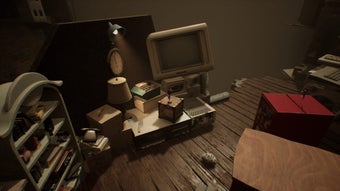
Hannah: a cinematic, interpretive puzzle-platformer for PlayStation 5
Hannah, developed by Spaceboy, drops the player into a stylized 1980s dream in which a young girl faces fragmented memories to reclaim a lost object and reconcile trauma. The game mixes cinematic third-person puzzle-platforming with environmental problem solving and stealth-like sequences that tie actions to narrative consequence. Its design emphasizes single-player, interpretive storytelling and measured exploration. The intended audience is players of atmospheric puzzle-platformers and psychological horror who favor story-led, reflective sessions.
What kind of game is Hannah?
The game operates as a cinematic 3D puzzle-platformer that treats traversal as narrative work rather than pure reflex challenge. So, platforming segments purposefully connect to story beats, with encounters designed to reveal memory fragments and emotional stakes. The core loop asks players to read environments, solve spatial puzzles, and choose paths that alter how scenes resolve, making each play session carry interpretive weight rather than only mechanical reward.
How do the mechanics shape each play session?
Mechanics focus on environmental interaction and situational navigation. Key movement options include:
- climbing and ledge traversal
- swinging and momentum-based navigation
- sliding and constrained stealth windows
These systems combine with puzzle elements that require timing and observation more than button precision. The single-player structure means encounters are tuned for solitary exploration and problem solving instead of competitive or cooperative play.
What does the game look and sound like?
The presentation leans heavily into a VHS-styled retro filter and deliberate motion work to sell its fairytale dread. Sound design and a score composed by a Grammy-winning artist provide a sustained emotional tone that frames scenes. Cinematic camera work and detailed character animation support set pieces, and the studio’s Latin American production sensibility shows in layered visual detail and a distinct audiovisual identity on modern consoles such as PlayStation 5.
How long does a playthrough feel and what drives replay?
Estimated single-play length sits near nine to ten hours, with branching decisions that unlock different narrative outcomes. Replayability comes from exploring alternate choices and uncovering other interpretive threads rather than added modes. Progression rewards investigation and decision-making, so players who value narrative variations can expect reasons to return and sample different endings across multiple sessions.
Hannah rewards players who prioritise emotional exploration over mechanical polish
Hannah is a thoughtful pick for players seeking a reflective, story-first solo experience that emphasizes consequence and atmosphere. Some reviewers have noted it can be "rough around the edges" regarding technical polish and save systems, so patience with occasional imperfections helps. Players prepared for interpretive pacing and emotional themes will find the game a meaningful, if occasionally uneven, journey.